|
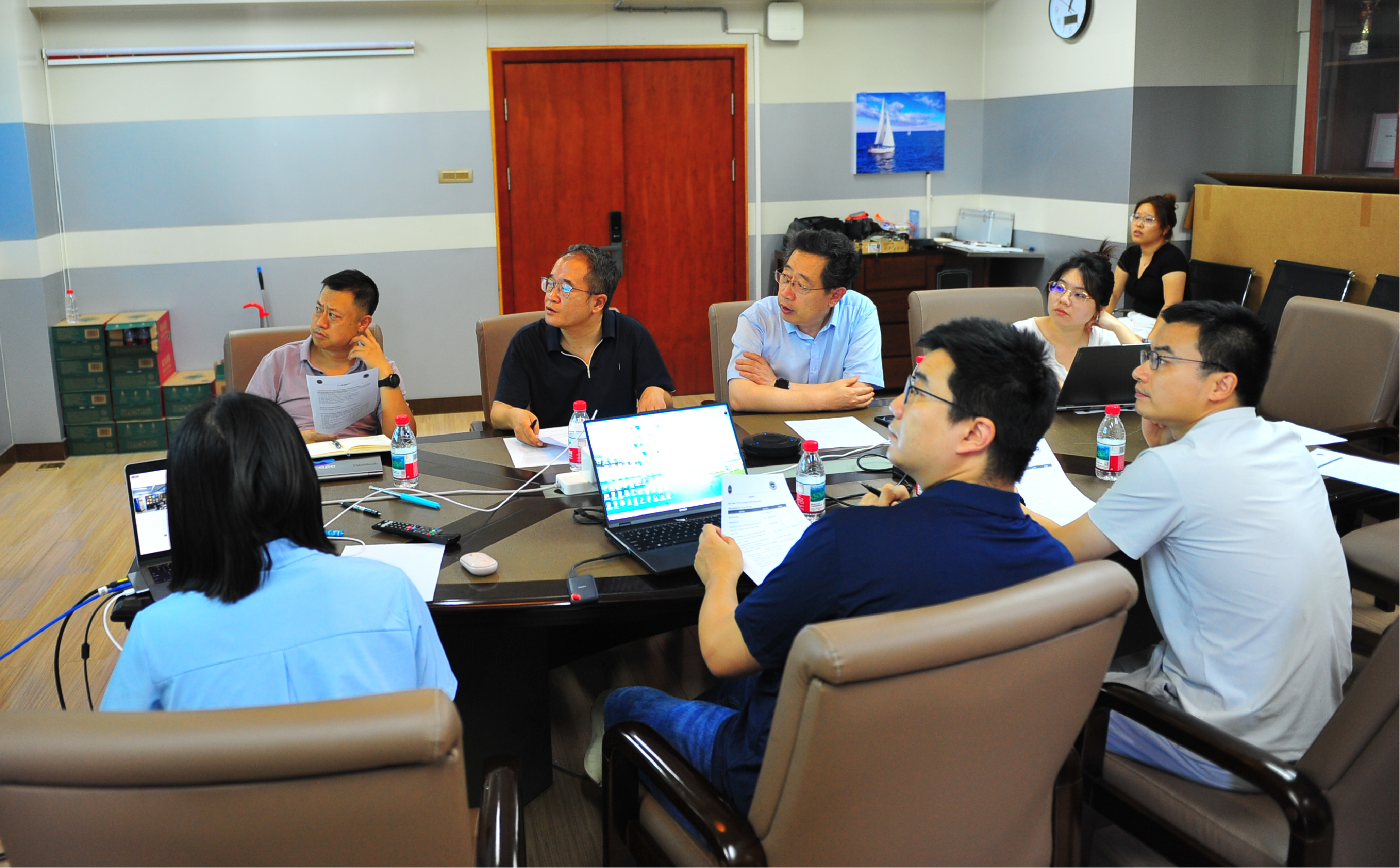
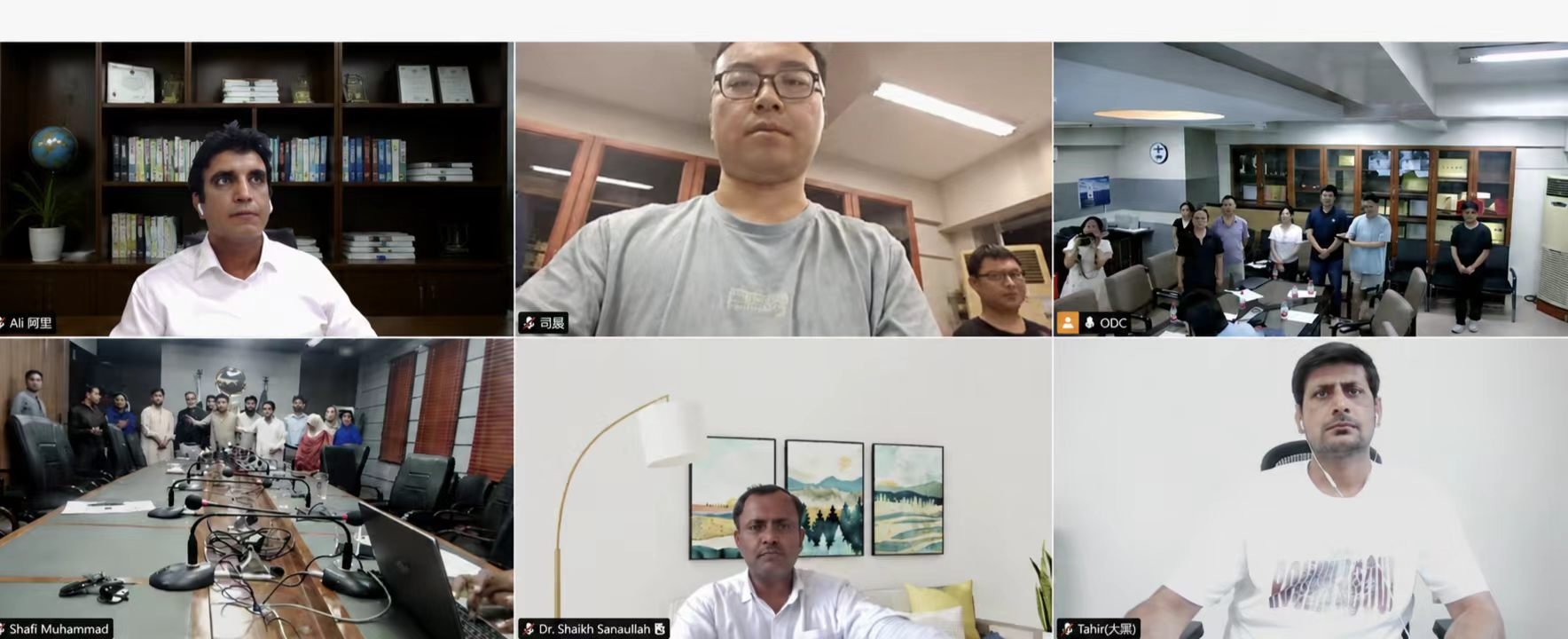
On August 26, 2026, the ODC Center and Lasbela University of Agriculture, Water and Marine Sciences (LUAWMS) of Pakistan jointly held an online academic workshop aimed at deepening practical China–Pakistan marine science and technology cooperation. Researchers from both sides held in-depth exchanges on topics including ocean numerical modeling, ocean observation, coastal sustainable development, blue carbon assessment, and marine spatial planning.
At the opening ceremony, Prof. Fangli Qiao delivered welcome remarks, reviewing the context of China–Pakistan marine science cooperation and introducing FIO's strengths in ocean numerical modeling, ocean observation, and international collaboration. Prof. Abdul Malik, representing LUAWMS, thanked the ODC Center for organizing the event and expressed willingness to advance practical cooperation and achieve more fruitful outcomes. During the workshop, researchers from the ODC Center presented several latest research advances. Dr. Bin Xiao introduced the FIO-COM global high-resolution coupled ocean model, whose core innovation—the surface wave-induced vertical mixing scheme—reduced mid-latitude mixed layer depth simulation error from -4.8 m to -0.6 m. The operational system has run stably on the TianHe-2 supercomputer for over 2,000 days. Dr. Dong Ji revealed the critical role of outer sensible heat flux in the formation of tropical cyclone outer rainbands. Dr. Jiechen Zhao presented the COAST toolkit, released at the Third UN Ocean Conference in June 2025, covering 23 functional modules across five domains. Dr. Shumin Jiang showcased the Jingwei GNSS buoy, with velocity accuracy of 1.5–4.8 cm/s and a cost about 4% of ordinary buoys. Dr. Chen Ma shared China's practical experience in marine spatial planning, including the UN Ocean Decade-endorsed "Accelerate Marine Spatial Planning in the Western Pacific" initiative, which has engaged 24 countries. Pakistani scholars delivered presentations on blue economy regional cooperation strategies, pre-fishery baseline investigation for sustainable sea cucumber management, mangrove restoration and blue carbon assessment in Balochistan, and coastal sediment resources.
Following the presentations, the two sides held in-depth interactive discussions on the adaptability of FIO models to Pakistani waters, deployment of Jingwei buoys, localized application of the COAST toolkit, marine spatial planning capacity building, mangrove conservation, and sea cucumber resource management, reaching broad consensus on pathways for personnel exchange and joint research.
|
ODC center and LUAWMS Hold Online Academic Workshop to Deepen China–Pakistan Marine Science Cooperation
Date: 2026-09-20 15:21 Author: Yan Wang Clicks: